




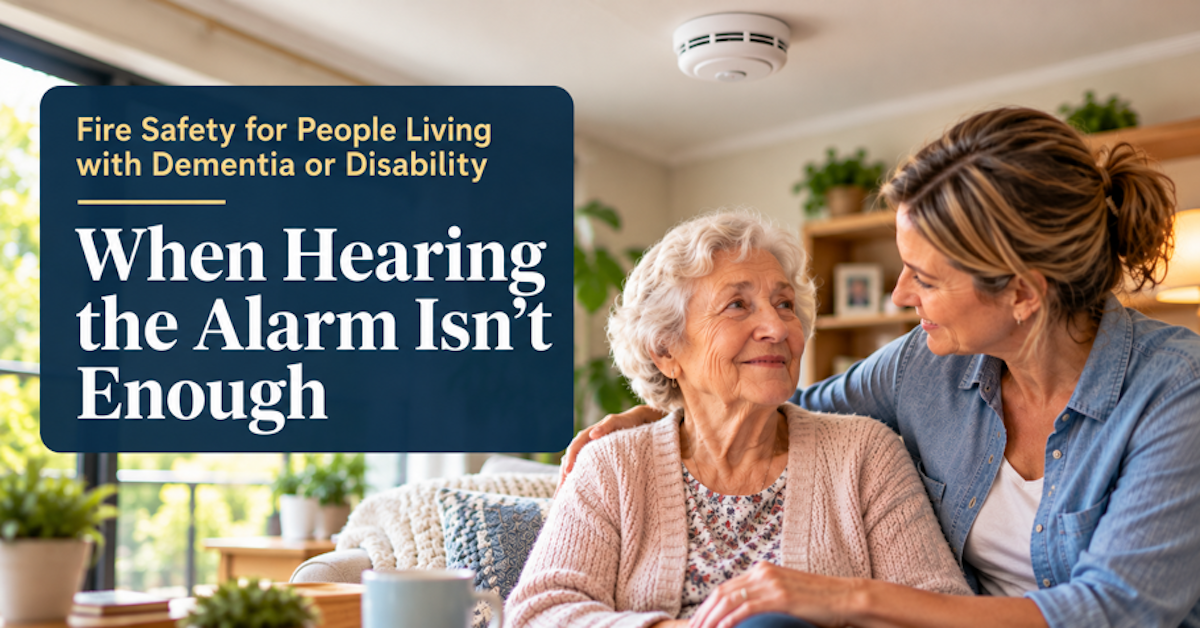
According to Dementia Australia, an estimated 446,500 Australians are living with dementia in 2026, and that number is projected to exceed one million by 2065. For families caring for a parent, partner or loved one, keeping them safe at home involves plenty of everyday considerations. One that can easily be overlooked is what happens if a fire breaks out.
Most of us know what a smoke alarm means. We hear it, recognise the danger and understand that we need to get out. For someone living with dementia, however, that familiar sound may cause confusion rather than prompt an immediate response, particularly if they are woken suddenly in the middle of the night.
Hearing loss and reduced mobility can complicate matters further. Someone may not hear the warning clearly or may need assistance to reach an exit, even in a home they have lived in for decades.
Families supporting older relatives often spend considerable time thinking about medication, mobility and preventing falls. Fire safety deserves a place in those conversations too, especially when a person’s needs are changing.
The Risks Behind the Numbers
An Australian study examining 900 preventable residential fire deaths between 2003 and 2017 found that nearly 47 per cent of those who died had at least one identified disability. When researchers excluded cases where disability status could not be established, that proportion rose to approximately 62 per cent.
Although the findings cover a broad range of disabilities rather than dementia alone, they raise an important consideration for households: a working smoke alarm is only one part of keeping people safe. Someone must also be able to recognise the danger and respond, which may be difficult when memory, hearing or mobility is affected.
Cathy Brand, CEO of Australian fire-safety company Brooks Australia, says household protection needs to reflect the abilities of the people living there.
“An alarm only works if the person can actually hear it, see it and understand what it means. For someone living with dementia, that’s not always the case,” Ms Brand says.
When a Familiar Sound Becomes Confusing
Dementia affects people differently, and the changes are not always obvious. Someone who manages comfortably during the day may struggle with an unexpected alarm or decisions that need to be made quickly.
An alarm sounding overnight can be especially disorienting. Even a person who knows the layout of their home may become uncertain about which way to go, while someone with hearing difficulties might miss the warning altogether.
Fire-safety technology offers additional ways to alert people who are deaf or hard of hearing. Interconnected smoke alarms activate together when one detects smoke, allowing a warning to reach other parts of the home without waiting for smoke to spread to each detector.
Compatible systems can also incorporate flashing strobe lights or vibrating pads placed beneath pillows, providing another way to alert someone who may not hear an audible alarm. Brooks Australia is among the manufacturers offering these options, including visual alert accessories and bedside vibration systems.
Ms Brand sums up the value of interconnection simply: “You want the warning travelling through the house faster than the smoke.”
While these devices can help people receive a warning, they cannot necessarily overcome the confusion or difficulty interpreting danger that some people with dementia experience. Families therefore need to consider how a person is likely to respond, as well as how they will be alerted.
Making the Escape Plan Fit the Person
Families often adjust a home gradually as an older relative’s needs change. Loose rugs are removed, bathroom handrails installed and furniture rearranged to make moving around easier. Fire safety deserves the same attention, particularly when someone may need help leaving the house quickly.
Ms Brand encourages families to approach an escape plan much as they would fall prevention.
“We’d also encourage families to think about a fire escape plan the same way they’d think about a fall prevention plan — walk through it together, practice it, and make sure it’s realistic for the person’s current abilities, not the abilities they had five years ago,” she says.
For someone using a walking frame, that could mean ensuring hallways remain clear and doors can be opened easily. In other households, the greater concern may be whether a person will recognise an exit or remember what to do when frightened.
Overnight arrangements deserve particular thought, including who could provide assistance if someone cannot evacuate independently. Rehearsing an escape route can help, but a plan should not depend entirely on a person with dementia remembering instructions during an emergency.
Small Changes Worth Making Now
A home fire-safety review need not involve major renovations. Testing smoke alarms, checking their age and location, clearing escape routes and keeping combustible materials away from heaters and cooking areas are sensible starting points.
Where someone has hearing loss, visual or vibrating alerts may provide an additional warning. Households supporting someone with dementia or significant mobility limitations may also benefit from discussing their arrangements with carers, relevant health professionals or qualified fire-safety installers.
There is a timely reason for Queensland homeowners to review their existing alarms. From 1 January 2027, the final stage of the state’s smoke-alarm reforms will apply to remaining domestic dwellings, including existing owner-occupied homes. Required alarms must be interconnected and installed in prescribed locations, including every bedroom and relevant hallways.
Meeting those requirements provides an important foundation, although families may need additional measures depending on who lives in the home.
A Conversation Before It Becomes an Emergency
As Australia’s dementia population grows, more families will face the challenge of helping loved ones remain safe while preserving as much independence as possible. Fire safety belongs in that conversation, alongside the everyday adjustments that make a home easier and safer to live in.
“We want families, carers and aged care providers to feel empowered to have this conversation early, rather than waiting for a near miss to prompt change,” Ms Brand says.
For families, a useful starting point is to walk through the home together, check the alarms and consider what would happen if a fire started while everyone was asleep.
The important question is whether the people living there would have the warning, understanding and assistance they need to get out safely.
Published 9-Oct-2026