




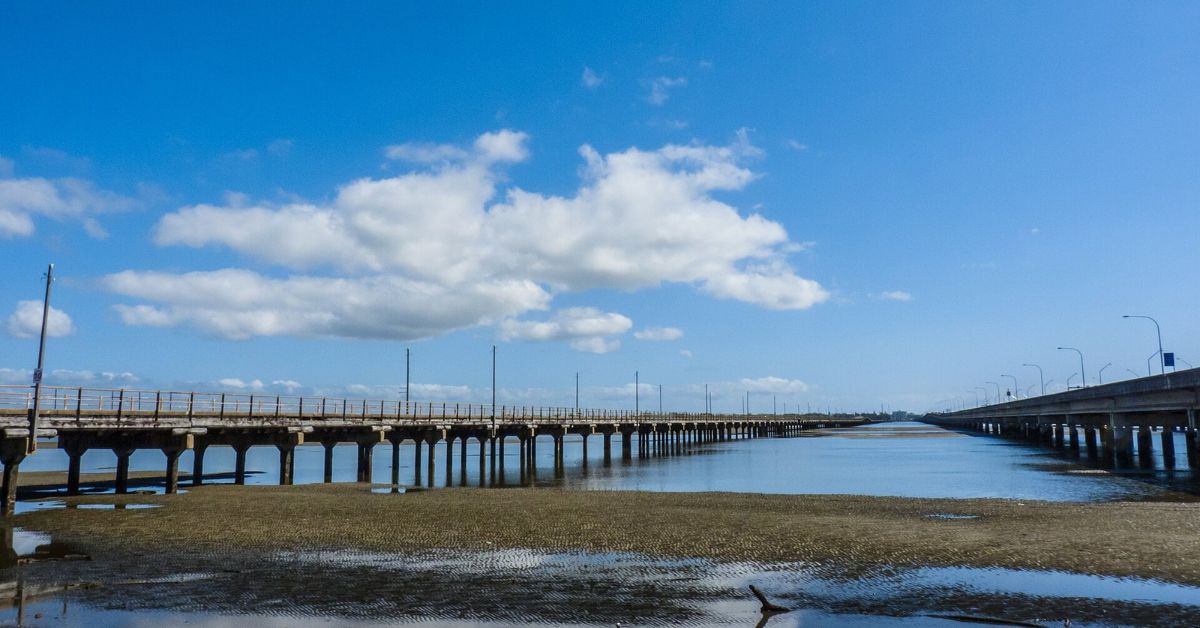
Walk along Flinders Parade today and it is difficult to imagine railway tracks running beside the waters of Bramble Bay. Yet Brighton’s forgotten railway was once the subject of an ambitious nineteenth-century transport proposal, while subsequent discussions about connecting Brisbane with Redcliffe involved electric trains, floating crossings and tracks twice as wide as Queensland’s conventional railway gauge.
October 2026 marked ten years since the opening of the modern Redcliffe Peninsula Line. More than a century earlier, however, a proposed coastal route would have placed Brighton’s waterfront at the centre of a railway connection to the peninsula.
The challenges extended beyond finding enough money to build it. Even marine creatures capable of boring through timber featured in discussions about construction costs.
A Railway Along Flinders Parade
In 1895, Alderman Phillips proposed a railway extension to Redcliffe at an estimated cost of £200,000, according to the State Library of Queensland’s history of Brighton.
The proposed route would follow Flinders Parade towards the Pine River before crossing its mouth. Another crossing would take the railway over Hays Inlet, reaching the peninsula near Woody Point and continuing north towards Redcliffe. A connection to the North Coast railway was also contemplated.
At the time, the district was developing a reputation as a seaside destination. Sandgate had been connected to Brisbane by railway since 1882, making the coast more accessible to city residents.
The popularity of seaside excursions was evident on New Year’s Day in 1899, when, according to the State Library’s account, more than 8,000 visitors travelled to Sandgate.
Extending railway access towards Redcliffe would have opened another stretch of coastline to passengers. Between Brighton and the peninsula, however, lay waterways that presented considerable engineering challenges.
Electric Trains and Floating Crossings
Historical accounts of a railway proposal discussed in 1897 reveal some particularly unusual ideas for overcoming those obstacles.
In a 2016 ABC News report, Queensland Rail historian Greg Hallam described plans for an approximately 18-kilometre connection involving Nudgee, Hays Inlet and Redcliffe.
Among the ideas considered was a pontoon crossing. Unlike a conventional bridge supported by fixed piers, a pontoon structure relies on floating supports. Historical illustrations reproduced by ABC show that such a crossing formed part of the railway discussions.
Hallam also described the serious consideration given to electrification, likening the concept to an electric tramway.
Electric traction is familiar to Brisbane commuters today, but its consideration for a coastal railway in the nineteenth century makes these proposals particularly striking.
The published historical accounts describe engineering concepts under consideration rather than an approved construction design. They nevertheless offer a glimpse into the range of ideas explored by those seeking a railway connection to Redcliffe.
Tracks Twice as Wide
Another unusual feature discussed during the railway planning was a seven-foot track gauge.
Railway gauge refers to the distance between the two running rails. Queensland’s conventional railway gauge measures three feet six inches, or approximately 1.067 metres.
The seven-foot gauge discussed for the coastal railway would have measured approximately 2.134 metres, exactly twice the width of Queensland’s established gauge.
According to Hallam, the wider gauge was considered in response to concerns about wind and waves affecting trains on an exposed crossing.
Such a railway would also have differed substantially from the existing Queensland network. Conventional railway vehicles could not operate directly on tracks of that width.
The gauge discussions illustrate the difficulties planners faced in attempting to extend railway infrastructure across the coastal waterways.
The Marine Creatures Beneath the Bay
While wind and waves presented challenges above the water, another complication lay beneath its surface.
The State Library’s account of the 1895 proposal identifies the presence of marine cobra worms as a factor in anticipated bridge construction costs.
Despite their common name, these creatures are wood-boring marine molluscs associated with shipworms. They can tunnel into submerged timber, damaging wooden structures exposed to marine conditions.
According to the historical account, their presence meant metal bridges were considered necessary instead of timber structures, increasing the anticipated cost of the railway.
The expense contributed to the shelving of the proposal. The marine organisms were not necessarily the deciding factor, but their inclusion in the historical account reveals how local environmental conditions influenced the financial challenges of building a railway across the waterways.
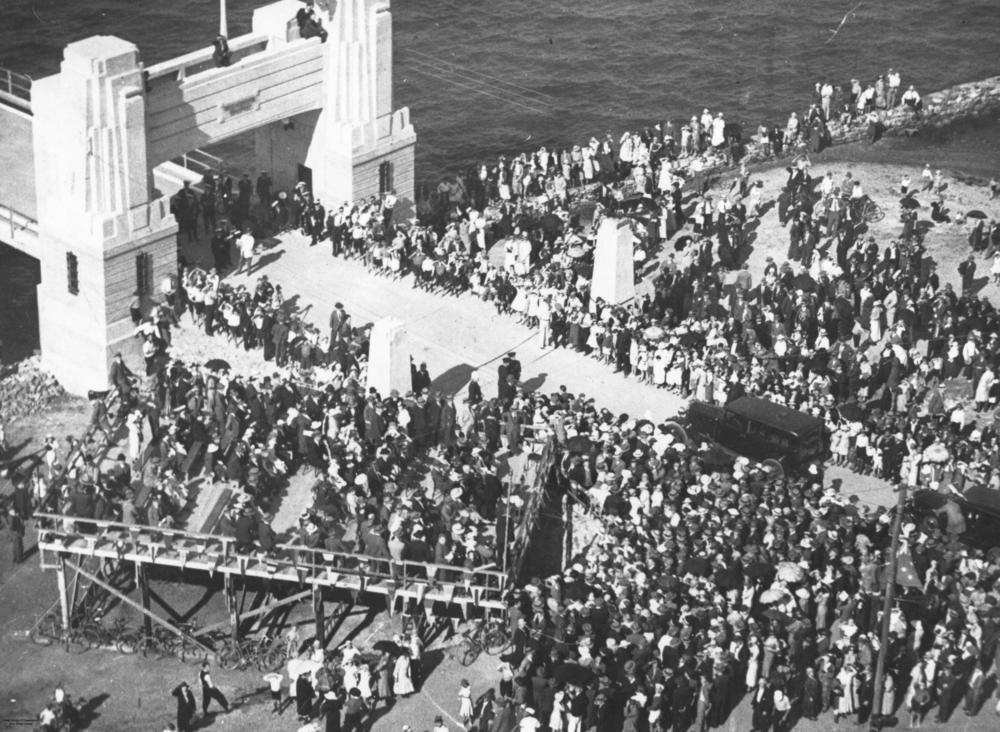
Photo Credit: State Library of Queensland/WikiCommons
Brighton’s Road Connection Arrives
Brighton eventually gained a direct transport crossing to the Redcliffe Peninsula, although it carried road vehicles rather than railway carriages.
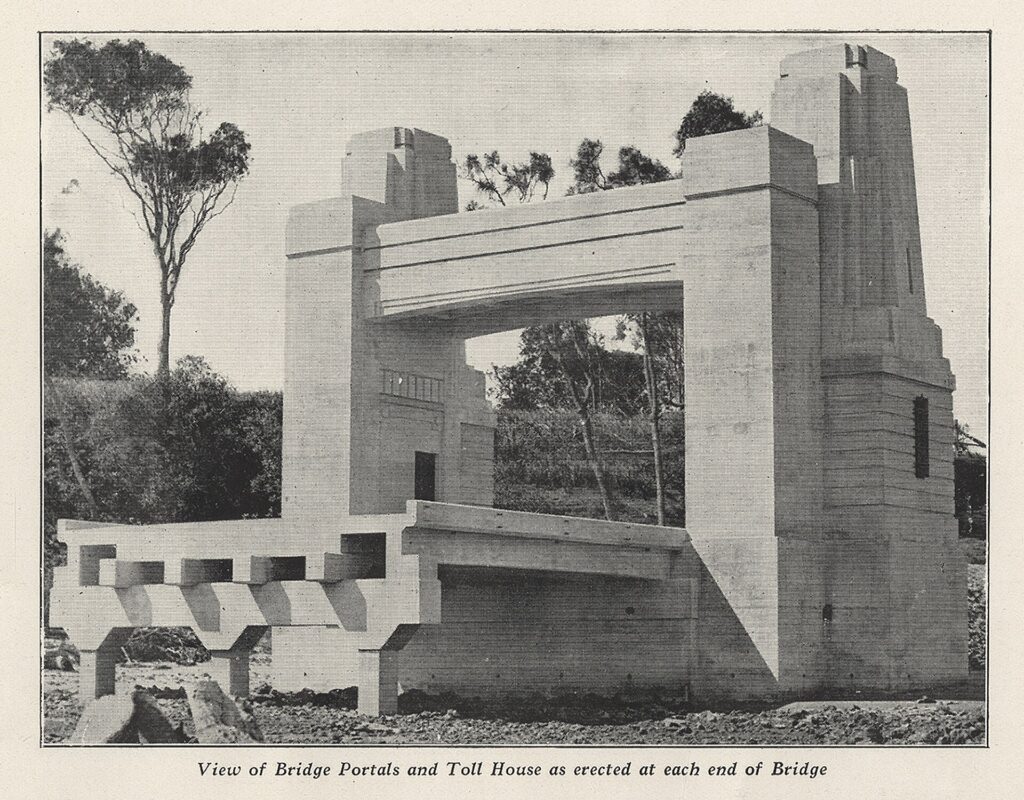
The Hornibrook Highway opened on 4 October 1935, establishing a road connection between Brighton and the peninsula.
A connecting bus service between Sandgate railway station and Redcliffe allowed passengers to complete their journeys by road. The crossing provided an alternative to the coastal railway proposals that had occupied earlier generations of transport planners.
The highway also changed the relationship between the seaside communities, making travel between the two sides of the bay considerably more convenient.
Redcliffe’s Trains Arrive From Inland
The modern Redcliffe Peninsula Line officially opened on 3 October 2016, with regular passenger services beginning the following day. The 12.6-kilometre railway added six stations, connecting Kippa-Ring with the established railway network at Petrie.
Brighton’s forgotten railway would have approached the peninsula from an entirely different direction.
Today, the view from Flinders Parade towards the bridges crossing the bay offers a reminder of the geographical obstacles those nineteenth-century proposals sought to overcome.
More than a century after railway tracks were proposed along Brighton’s waterfront, electric trains finally reached the Redcliffe Peninsula. They arrived through Petrie, leaving Flinders Parade on the shores of Bramble Bay rather than on a railway corridor to Redcliffe.
Published 20-November-2026