





Sandgate Moora Park has been the bayside’s social heart for over a century, with its Victorian-style 1897 bandstand still hosting gatherings where families once flocked for music, carnival rides and cooling summer breezes.
The phrase “meet you at Moora Park” echoes through generations of Sandgate and Shorncliffe families. What began as the suburb’s premier entertainment venue in the late 1800s remains a gathering place today, though the chair-o-planes and canvas marquees have long disappeared.
When Moora Park Was the Place to Be
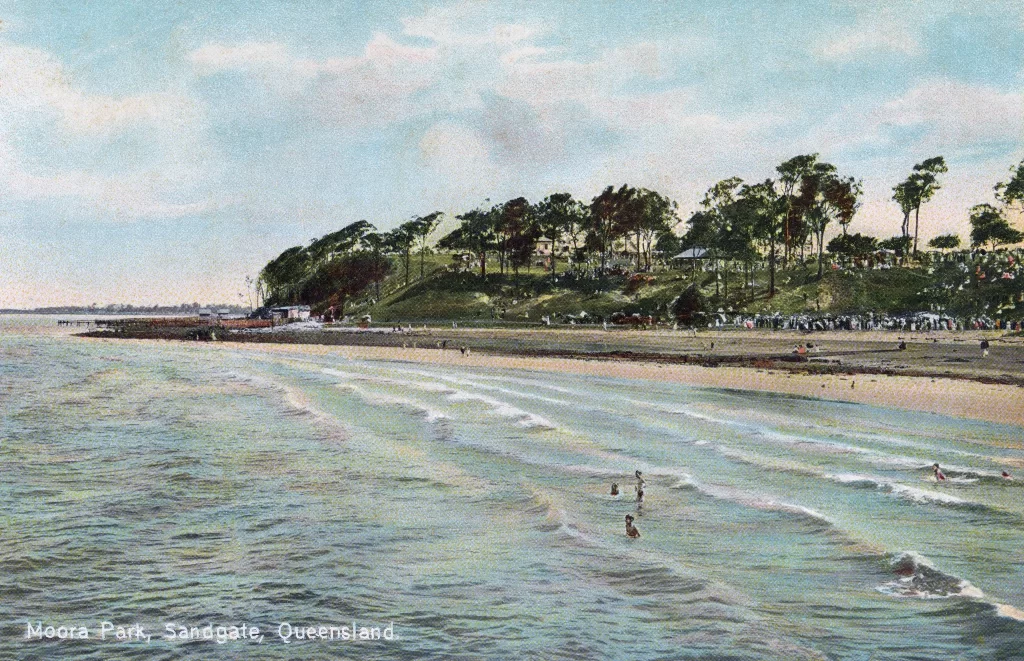
Around 1902, postcards captured Moora Park as a bustling seaside destination. Early photographs show families crowding the waterfront, drawn by concerts at the bandstand and the promise of sea breezes on hot Brisbane days.
By 1930, Sandgate Moora Park had evolved into a full entertainment precinct. Historical images from that era reveal chair-o-plane rides spinning near the beach, canvas marquee tents dotting the foreshore, and crowds seeking relief from summer heat. A kiosk served refreshments until its demolition in 1974, marking the end of an era when the park functioned as a commercial entertainment hub.
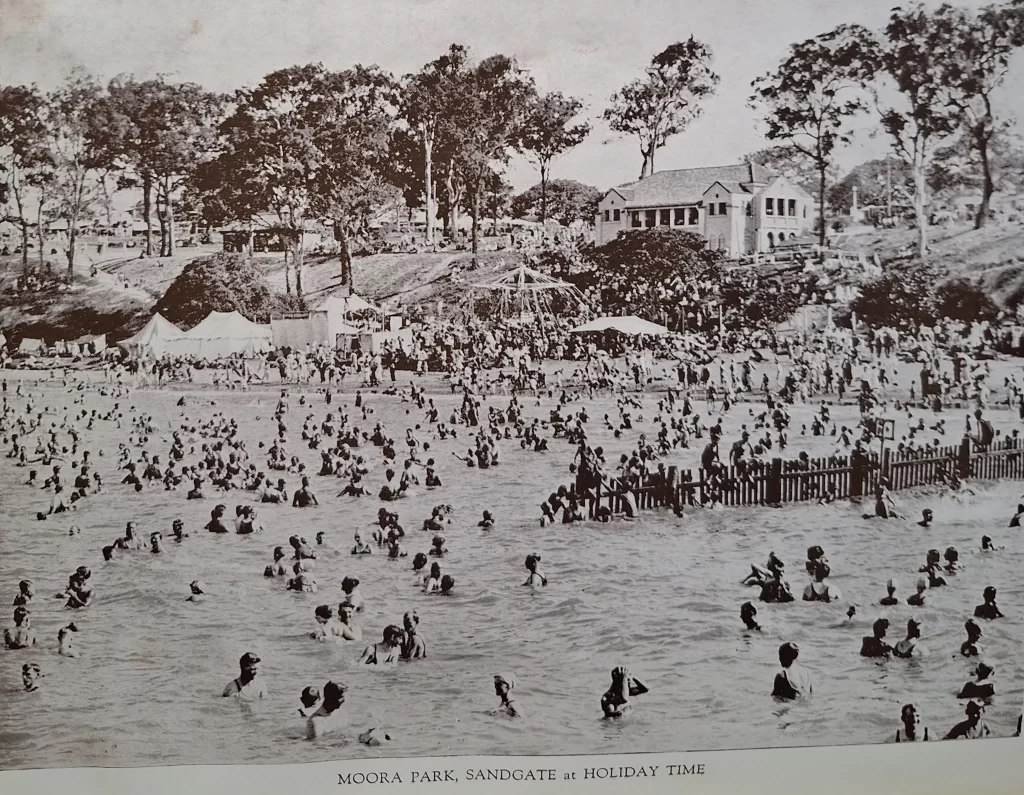
The rotunda built in 1897 formed the centrepiece of public gatherings. Concerts and community events drew people from across Brisbane’s northern suburbs, making Moora Park more than just a local amenity. It became a regional destination where suburbs bonded over shared experiences of music, holidays and simple pleasures like sitting under the trees.
From Sandgate to Shorncliffe
Perched on the Shorncliffe bluff, the park sits in an area originally known as Upper Sandgate. This shift in boundaries didn’t diminish Moora Park’s role as a social anchor. The extensive lawns overlooking Moreton Bay and the Redcliffe Peninsula provided space for picnics, sports and the kind of unstructured gathering that built neighbourhood connections.
Historical records show how the park adapted to changing tastes. The commercial carnival atmosphere of the early 1900s gradually gave way to quieter family recreation. The chair-o-planes vanished, the kiosk came down, but families kept coming because Sandgate Moora Park offered something timeless: waterfront space where people could gather without formality or cost.
Heritage That Still Functions
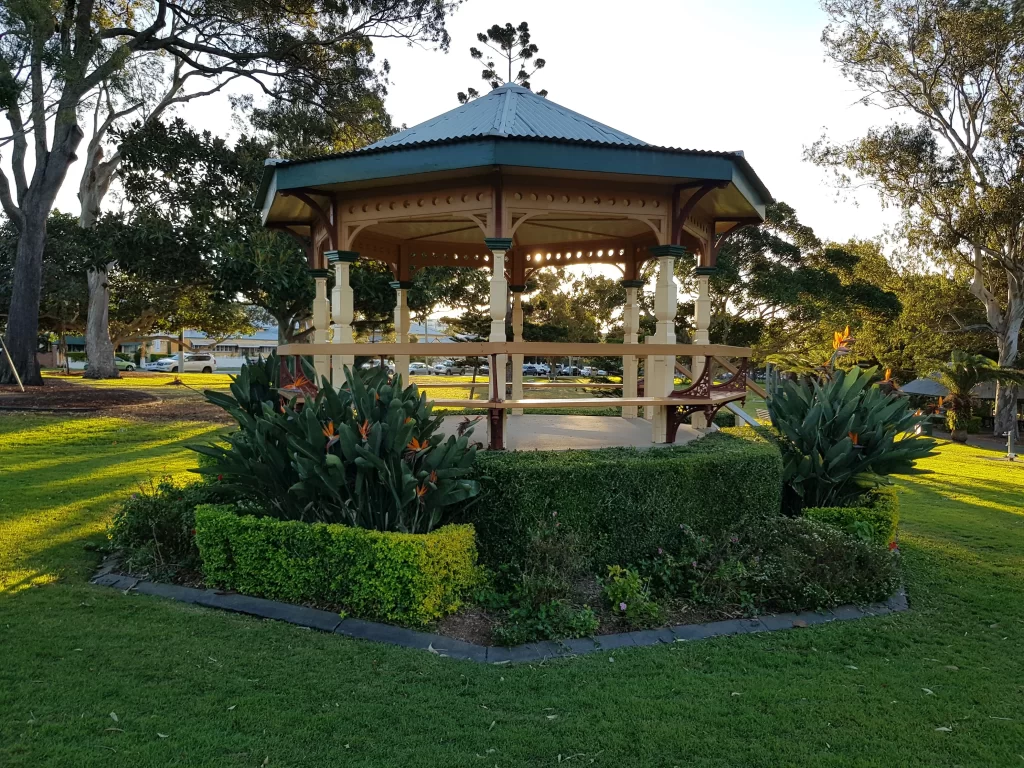
Today’s Moora Park retains its 129-year-old rotunda, now a holding up to 17 people, with power and marquee permits available. The structure maintains its original charm while serving modern functions like small weddings, birthday parties and community gatherings.
The park’s designation as a local heritage place recognises its historical importance beyond architecture. It acknowledges how this waterfront green space shaped bayside social life across multiple generations. Families who visited as children now bring their own grandchildren to the same lawns and playground.
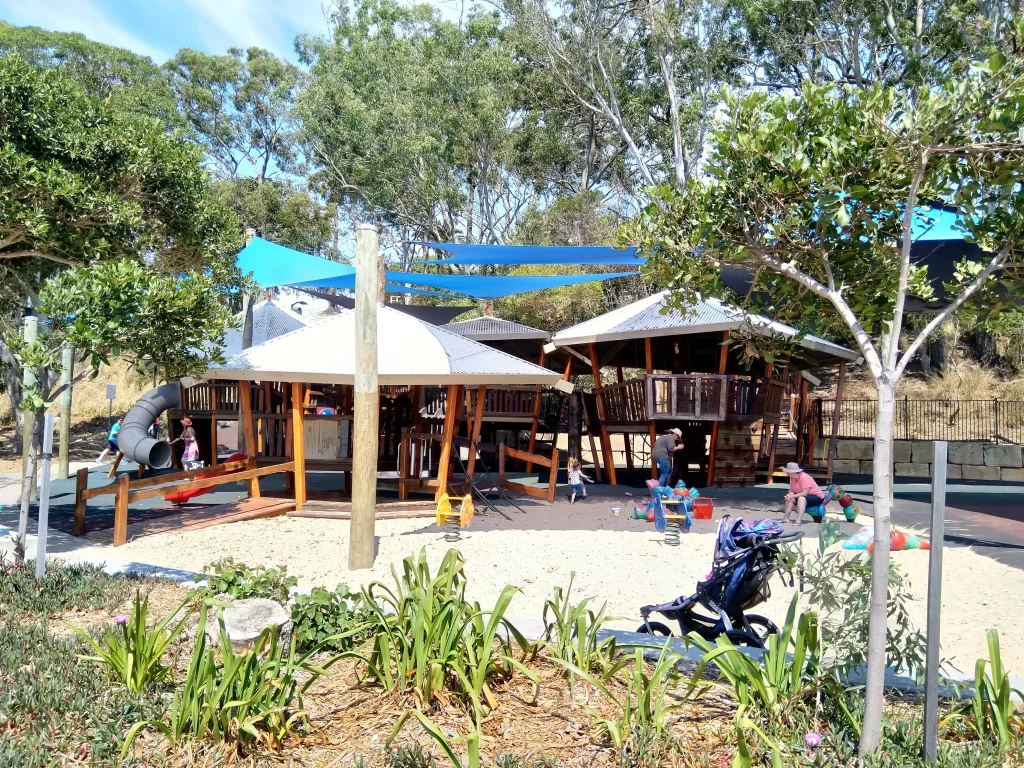
Current amenities include barbecues, picnic shelters, playground equipment featuring traditional swings on the upper level and an expansive timber fort playground below. The facilities support the casual gatherings that have always defined the park’s purpose. People still meet at Moora Park, though they’re more likely arranging weekend barbecues than attending bandstand concerts.
A Social Calendar Written in Grass and Shade
Moora Park’s real heritage isn’t just the rotunda or the postcard views across Moreton Bay. It’s the accumulated memory of thousands of gatherings, from grand public concerts to quiet family picnics. The park witnessed courtships, birthday celebrations, holiday traditions and those unremarkable summer afternoons that somehow became treasured memories.
For Sandgate families, the park represents continuity. Grandparents remember the kiosk, parents recall childhood playground visits, and today’s kids climb the same trees that shaded earlier generations. This layering of experience makes Moora Park more valuable than its facilities alone would suggest.
The phrase “meet you at Moora Park” carried weight because everyone knew the place. It required no street address or detailed directions. The park functioned as a community landmark where social calendars naturally intersected, where chance meetings happened because everyone eventually passed through.
What Moora Park Means for Sandgate Today
Sandgate Moora Park shows how public spaces gain value through sustained use across generations. The 1897 rotunda matters not just as heritage architecture but as proof that some gathering places endure because they meet fundamental human needs for shade, water views and room to spread a picnic blanket.
The park’s evolution from entertainment precinct to quiet recreation area reflects broader changes in how Australians spend leisure time. Yet the core function persists: providing waterfront space where bayside residents can gather without barriers or costs. Modern Sandgate might lack the chair-o-planes and concert series, but families still choose Moora Park when they need a place to meet.
Visit Moora Park at 65 Park Parade, Shorncliffe. The rotunda is available for booking through Brisbane’s park reservation system, while the lawns, barbecues and playground remain free for all visitors.
Published 26-January-2026.