Sandgate in Line for Housing Boost as Suburban Renewal Plan Takes Shape

Plans to increase housing density in Sandgate are moving forward, with boundary details released for a proposed Suburban Renewal Precinct Plan that would bring changes to parts of the northern bayside suburb.


Read: Plans Submitted for The Baybrook Retirement Village in Brighton


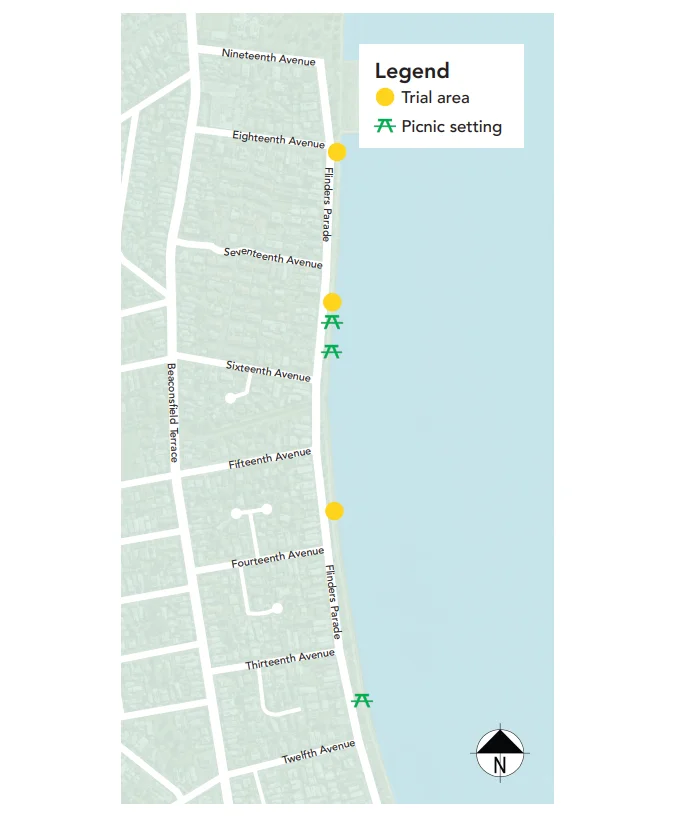
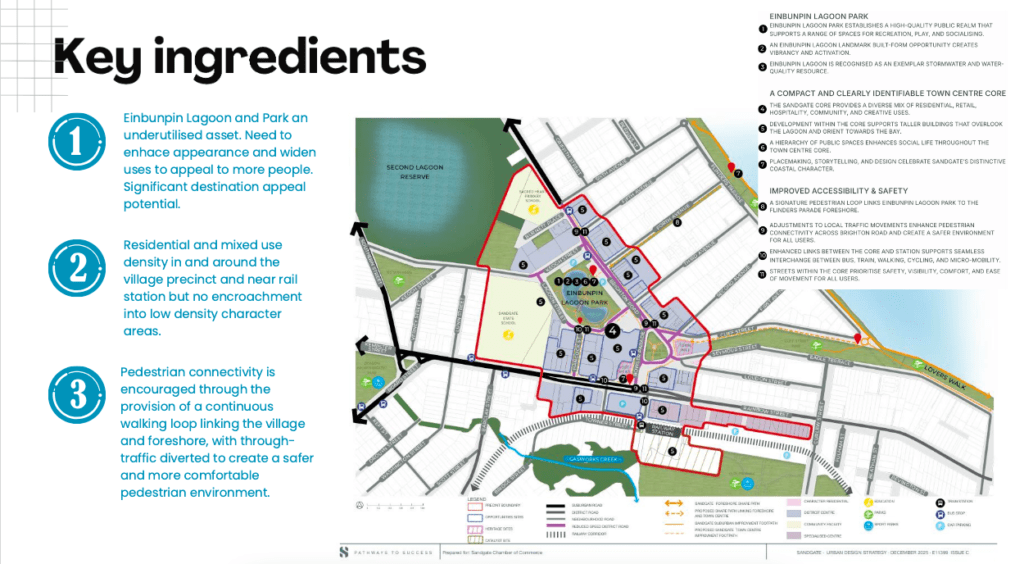
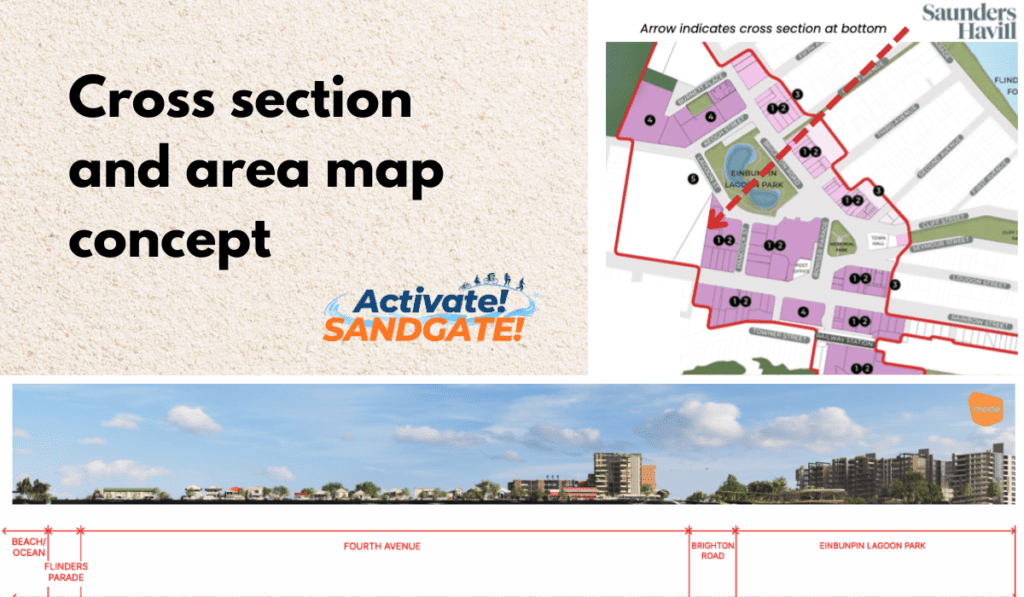
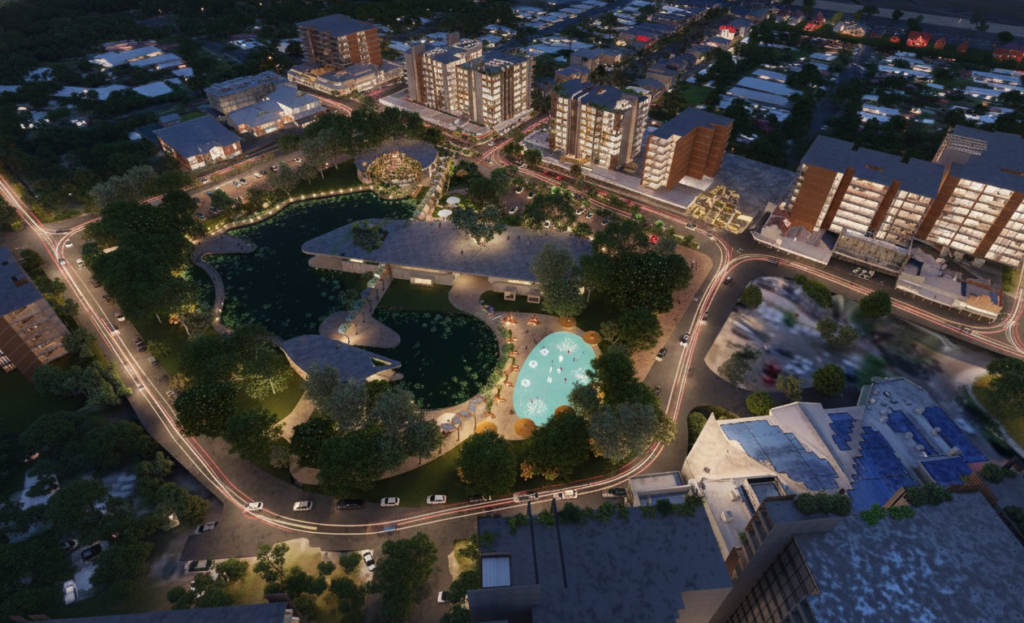
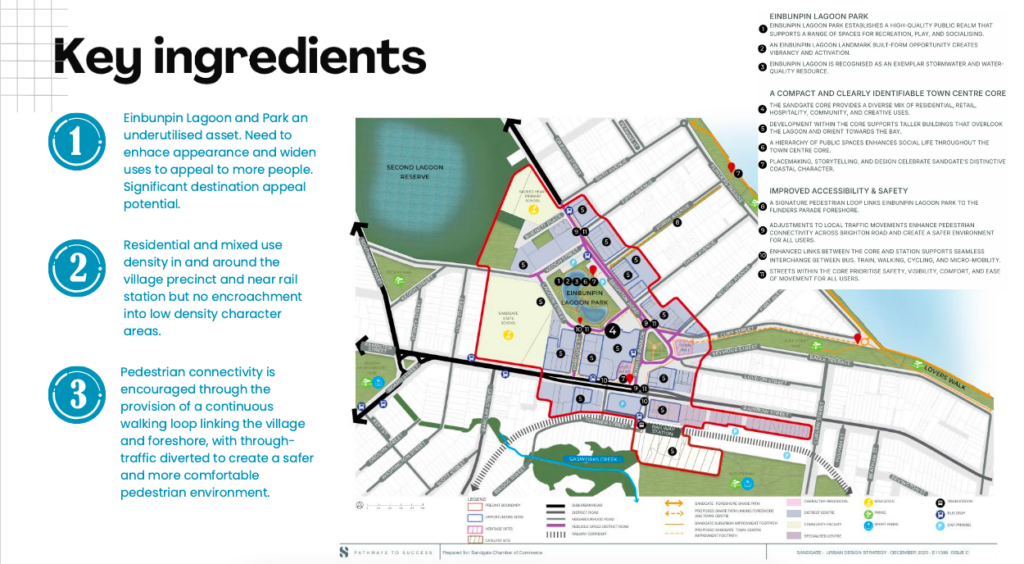
The proposed precinct would take in parts of Brighton Road and Rainbow Street, running along the north side of the train line and extending to Burnett Place. Several community spaces fall within the proposed boundaries, including Einbunpin Lagoon Park and Sandgate War Memorial Park.

Sandgate Precinct Renewal Area Map

Photo credit: BCC

Brisbane is currently absorbing around 600 new residents every week, and although Sandgate is currently one of the city’s slowest-growing suburbs, the existing train station, local businesses and foreshore are factors that make it a suitable location for suburban renewal. The Deagon ward, which covers the area, is serviced by eight train stations.

City Planning says the Suburban Renewal Plan aims to encourage more homes close to shops, cafes, community facilities and public transport, while working with the community to find the right balance and preserve Sandgate’s bayside character and outdoor lifestyle.

Photo credit: Google Street View

The proposal builds on the existing Sandgate District Neighbourhood Plan, adopted in November 2022 and in effect since 2023 following state approval. Under that framework, a five-storey maximum was set for Lagoon Street — down from six storeys, after more than 3,000 residents signed a petition opposing the original proposal in 2020.

No new height limits have been released specifically for the Sandgate precinct at this stage. Separately, changes proposed for low to medium-density residential areas across 14 per cent of Brisbane’s suburbs would lift height limits from the current two-to-three levels to three levels, or up to four storeys in well-serviced locations.

Smaller lot sizes and reduced car parking requirements are also proposed. Similar precinct plans in Stones Corner and Wynnum have included rezoning for taller mixed-use developments combining retail and residential space.

Labor opposition leader Jared Cassidy has questioned the economic viability of building above six levels in parts of Sandgate, citing advice from developers about high water tables that require continuous basement pumping.


Read: Sandgate’s ‘Rosewood’ to Change Hands After 127 Years in One Family


The plan is expected to progress through a number of stages. In early 2026, the focus is on background investigations and gathering initial community feedback to help shape the draft plan. From mid to late 2026, the draft plan will be released for broader community and Queensland consultation. From late 2026 through to early 2027, feedback will be reviewed and a final plan prepared.

Residents are invited to provide feedback at various stages of the process, beginning with initial community consultation in early 2026.

Published 20-February-2026

Plans Submitted for The Baybrook Retirement Village in Brighton

A development application has been lodged for The Baybrook, a proposed retirement and residential care facility in Brighton that would introduce a vertical village model to the bayside suburb.


Read: Historic Brighton World War II Site Set for Transformation into Major Seniors Living Precinct


The proposal, submitted by LDK Seniors Living, concerns a 2.1-hectare site at 16 Twenty Fourth Avenue, Brighton, located 27.9 kilometres north of Brisbane’s CBD. The development seeks approval for a staged redevelopment that would deliver 136 retirement living units and 19 residential care beds across two multi-storey buildings.

Photo credit: Brisbane PD Online – A006934945

Designed by architectural firm Rothelowman, the project represents LDK Seniors Living’s first venture into Queensland. The company purchased the site from the Uniting Church in September last year.

The proposal outlines a two-stage construction approach across the property. Two buildings are planned for the site: Building A would rise seven storeys to approximately 28.2 metres, while Building B would reach six storeys at approximately 20.4 metres. The development would include 301 car parking spaces, divided between 195 resident spaces and 106 visitor and staff spaces.

Development Stages

Photo credit: Brisbane PD Online – A006934945

The first stage would deliver 64 retirement living units and 19 residential care beds. This phase would also include a sales and discovery office.

The second stage would add a further 72 retirement living units to the facility, bringing the total independent living accommodation to 136 units across the completed development.

The facility is designed to cater for elderly residents with varying needs, from active and independent individuals to those requiring high-care and memory-care accommodation. Planning documents indicate the vertical building approach aims to minimise the development’s footprint while delivering housing and support services in a compact format.

Photo credit: Brisbane PD Online – A006934945

Ancillary facilities planned for residents include dining areas, a café and bar, allied health services, a pharmacy, a theatre, and hair and barber services. These amenities are intended to support day-to-day living within the village environment.

Photo credit: Brisbane PD Online – A006934945

The southern portion of the site will remain undeveloped as part of this application, pending resolution of local heritage matters. The planning documents do not specify the nature of these heritage considerations.

LDK Seniors Living CEO Byron Cannon previously described the project as a milestone for the company. In comments reported when the site was purchased, Cannon stated the development would bring the company’s seniors living model to Queensland and deliver what the company calls its One Move Promise, which includes 24/7 care and what the company describes as lifestyle for life.


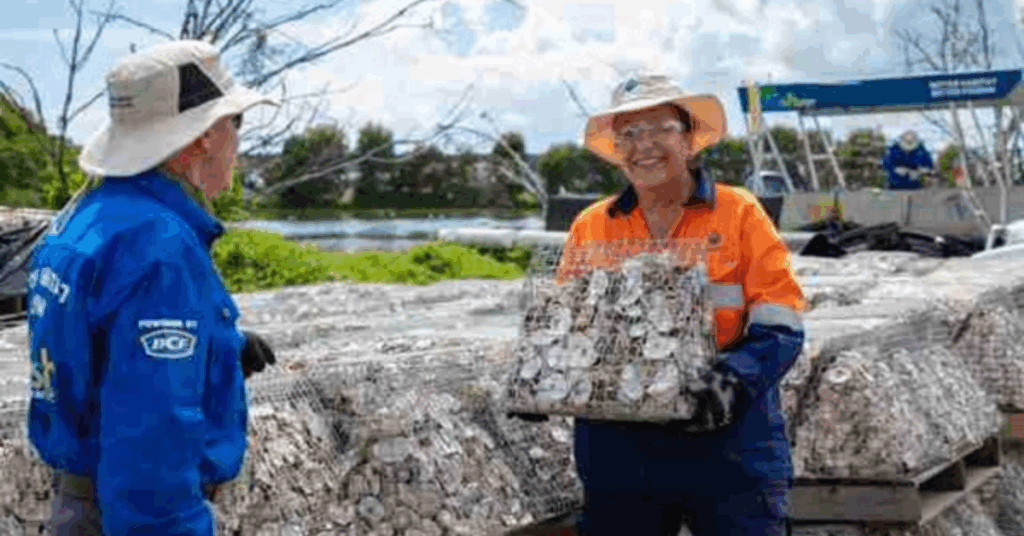
Read: Brighton Waterway Gets Help from Oysters


The planning documents state the development targets seniors seeking to downsize while maintaining access to care, with the design incorporating shared spaces intended to create an active community environment.

Featured image credit: Brisbane PD Online – A006934945

Published 11-February-2026

Sandgate Aquatic Centre Draws 65,000 Swimmers in Peak Summer Season

Sandgate Aquatic Centre has welcomed more than 65,000 visitors in December and January, making it Brisbane’s most popular pool destination this summer under the $2 entry program.


The waterfront facility outpaced 21 other pools across the city, with swimmers flocking to the bayside location to escape the heat at an affordable price. Newmarket Olympic Swimming Pool came close behind with 64,000 visitors, while Musgrave Park Swimming Centre attracted 42,000 people during the same period.

Record Turnout Across Brisbane Pools

More than 513,000 visitors have used Brisbane’s public pools over the past two months, taking advantage of the reduced entry fee that applies to adults, children, concession holders and family passes. The $2 pricing continues through the end of February, giving Sandgate locals and visitors from across the region a few more weeks to enjoy the aquatic centre.

Sandgate Aquatic Centre
Photo Credit: Sushila Duwal / Google Maps

The initiative, which first launched in the 2023-24 budget, covers all 22 pools including nearby facilities at Chermside and Brighton. It’s designed to ease cost pressures on families while encouraging more people to stay active during the warmer months.

Safety Remains Priority as Numbers Surge

With thousands more swimmers using facilities like Sandgate Aquatic Centre this season, pool operators are emphasising water safety through the Royal Life Saving Society’s Keep Watch program. Parents and carers are reminded to maintain constant supervision around water, particularly during peak periods when pools are busiest.

The $2 Summer Dips program runs until February 28, 2026. Entry is available during regular operating hours at Sandgate Aquatic Centre and all participating Brisbane pools.


Published 8-February-2026.

Police Hit The Streets Reminding Residents About Basics of Home and Vehicle Security

Police from the Gateway Crime Prevention Unit brought their message directly to the community last Sunday, walking the streets of Sandgate and knocking on doors — or rather, dropping information in letterboxes — to remind residents about the basics of keeping their homes and vehicles secure.


The walkabout on 2 February saw officers engage face-to-face with locals, sharing practical tips that require no expensive gadgets or major renovations. The focus was squarely on everyday habits: locking your car, keeping valuables out of sight, and making sure that communal gates and garage doors actually close behind you.

Senior Constable Diana Kratochvil, who shared the outreach initiative through Queensland Police’s Brisbane North district page, emphasised that property theft is largely opportunistic. That framing matters, because it means small, consistent actions can genuinely reduce risk. You don’t need to turn your home into a fortress — you just need to make it a slightly harder target than the next one.

The advice covers both houses and apartments. For those in unit complexes, there’s a particular nudge to pause and check that garage doors and shared entry points have fully closed before walking away. It sounds obvious, but in the rush of daily life, it’s easy to assume someone else will handle it.

Police are also encouraging residents to work through a Home Security Checklist, available through Queensland Police. The checklist is designed to prompt a more thorough look at potential weak spots — doors, windows, screens, and storage areas for things like e-bikes and electric scooters, which have become increasingly common targets in residential car parks.

Photo Credit: myPolice Brisbane North

Sandgate is, by most measures, a relatively safe suburb. According to 2024 data compiled by RedSuburbs, which draws on Queensland Police statistics, Sandgate recorded 129 theft cases that year — the suburb’s most frequently reported offence — along with 22 burglary and break-and-enter incidents. Overall crime in the suburb decreased by 6.65 per cent between 2023 and 2024. That downward trend is encouraging, but police clearly want to keep momentum going.

Across the broader Brisbane area, property offences remain the dominant category of crime. Research compiled from Queensland Police Service data indicates that most residential break-ins follow predictable patterns, with forced entry through doors and windows the most common method, typically occurring during daylight hours when occupants are away. Offenders tend to favour homes that appear unsecured or lack visible deterrents. It’s a useful reminder that the risks aren’t abstract — and that simple deterrents genuinely work.

For Sandgate residents wanting to act on the police advice, here’s a summary of the key tips shared during the letterbox drop:

  • Lock up — Doors, windows, and screens should be secured even when you’re home and relaxing.
  • Hide valuables — Car keys, phones, and wallets should be stored away from windows and out of plain sight.
  • Check the gate — In apartments or complexes, make sure communal entries and garage doors close fully when you come and go.
  • Secure your gear — E-bikes and scooters should be locked up or stored out of sight in car parks.


If you notice something suspicious, you can report it to Policelink via the online suspicious activity form at www.police.qld.gov.au/reporting, available around the clock. To report anonymously, contact Crime Stoppers on 1800 333 000 or at www.crimestoppersqld.com.au.

Published 6-February-2026

Sandgate Hawks Recruit Sentenced Over Domestic Violence Offences

A former Brisbane Lions reserve player who joined the Sandgate Hawks in 2025 has been sentenced after pleading guilty to domestic violence and drug offences.


Aden Rutledge, 30, appeared in Brisbane Supreme Court where he pleaded guilty to one count each of entering a dwelling, burglary, and threatening violence as domestic violence offences, and one count of possessing methamphetamine.

According to the crown prosecutor, the court heard that on 6 April 2024, Rutledge entered a residence. An argument ensued during which he allegedly raised a baseball bat while the complainant and her friend yelled at him to leave the house.

The court heard the complainant was mobility-impaired at the time of the incident. The crown prosecutor told the court that Rutledge then allegedly jumped next to the complainant and made threatening statements, before taking her phone.

Justice Michael Copley confirmed during proceedings that Rutledge had no criminal history associated with firearms.

Rutledge was released on parole after serving 85 days in pre-sentence custody.

Photo Credit: Instagram / @sandgatehawks

The Sandgate Hawks signed Rutledge to their squad in March 2025. According to the club’s Instagram account at the time, they were welcoming his return to the sport after several years away from football.

Aden Rutledge in 2013
Photo Credit: Australian Football League


According to the Australian Football League website, Rutledge was a 2013 draft prospect who had regularly played in the Brisbane Lions reserves for two seasons by that time. By 2013, he had represented Queensland twice at the Under-18 National Championships.

Published 3-February-2026

Sandgate’s ‘Rosewood’ to Change Hands After 127 Years in One Family


A new chapter is about to be added to a rare piece of Sandgate history, with a heritage home that has remained in the same family for more than 127 years now preparing to change hands.


Built in 1895 and originally known as ‘Rosewood’, the two-storey residence at 11 Lunn Street has been held by the McKeering family since 1897. It’s long enough to span five generations, and to quietly watch Sandgate evolve around it.

Photo Credit: Supplied

Over the decades, the home has worn plenty of hats. Family accounts describe it as a lively gathering place in the 1930s, then later reconfigured as flats, before returning to its role as a single family home. In more recent years, it has been carefully reshaped again, not as a reinvention, but as a continuation of the life already lived inside its walls.

Current owners Greg and Rachel McKeering have called the property home for more than two decades. During that time, the house has been renovated and reworked to suit a growing family. It was a long, practical process led by Mr McKeering, a semi-retired carpenter and builder. One telling detail: the kitchen was moved multiple times over the years as needs changed, a reminder that even the oldest homes remain works in progress.

Yet the home’s earlier character hasn’t been erased. Original elements have been preserved where possible, including rosewood flooring that remains intact beneath newer finishes — a hidden layer of the house’s first life, waiting for whoever comes next to decide what to reveal.

Photo Credit: Supplied

Today, ‘Rosewood’ is a large and flexible home, arranged across two levels with six bedrooms, multiple living areas, and a layout designed to accommodate different generations under one roof. A separate downstairs apartment, with its own kitchen and bathroom, adds to that versatility. It’s offering space for extended family, older teenagers, or guests who need a little independence.

Outside, the backyard tells its own more recent story. The family installed a pool that has since become the centre of countless get-togethers. It’s a modern counterpart to a century-old home that has always been about people coming together. With a pool and heated spa and areas set up for outdoor living, it’s easy to imagine the noise of Christmas afternoons and weekend visits echoing the kind of gatherings Sandgate homes are built for.

Photo Credit: Supplied

Some of the most personal memories are also the simplest: children raised there, milestones marked there, and even one extraordinary family moment — a grandchild delivered in an upstairs bathroom — becoming part of the home’s private history.

Now, with the family preparing for a tree change to acreage, they’re leaving behind more than a house. They’re handing over a place that has carried everyday life for more than a century: altered and adapted, but continuously loved, and anchored to the same patch of Sandgate soil since the late 1800s.

For locals, it’s a rare chance to reflect on how much history can sit quietly behind a familiar façade, and how, sometimes, the biggest change isn’t a renovation or an extension, but simply the moment a well-kept family home becomes someone else’s story.


Published 31-Jan-2026

Shorncliffe Station Works Continue In 2026, With Sandgate As Interim Terminus

Major works are progressing on the Shorncliffe station renewal and accessibility upgrade, with line services temporarily terminating at Sandgate while the Shorncliffe station remains closed.


January 2026 Construction Update

Works at Shorncliffe station advanced following its closure in late November 2025, with multiple construction activities underway as of January 2026. The heritage station building has been temporarily relocated to the station carpark to allow structural carpentry works to proceed.

Restoration activities have also begun on the heritage awning, alongside the removal of the existing concrete footpath, ramp and stair access to the platform. Concrete has been poured for a new footpath, and excavation works are underway around the station building to prepare for the installation of modern station services.

Additional completed works include demolition of the former public toilet block and removal of the concrete slab roof from the World War II-era air raid shelter.

heritage restoration
Photo Credit: Queensland Rail

Upcoming Works

According to the January 2026 update, the next stages of construction include rebuilding the amenities wing of the heritage station building and commencing paint restoration works. New roofing and guttering are planned for heritage buildings and awnings.

Further works are scheduled for waterproofing and painting the air raid shelter, along with construction of a retaining wall linked to a new core zone waiting shelter. Construction activities are generally planned between 6 a.m. and 6 p.m., Monday to Saturday, unless otherwise advised.

Sandgate station upgrade
Photo Credit: Queensland Rail

Transport Arrangements During Closure

While the station remains closed, Shorncliffe line trains terminate at Sandgate station. Shuttle bus route R346 continues to operate between Sandgate and Shorncliffe to maintain passenger access during the renewal works.

A dedicated school shuttle service for St Patrick’s College students is operating from Wednesday 28 January. The service includes three trips from Sandgate statio n before school and six return services from St Patrick’s College after school, operating as a direct route between the station and the school.

Queensland Rail
Photo Credit: Queensland Rail

Background And Heritage Context

Shorncliffe station was purpose-built in 1897 as a seaside rail terminus for north Brisbane residents and was expanded in the mid-1910s as the area developed. The site contains Brisbane’s only surviving railway station air raid shelter from World War II, which is being retained as part of the project.

The station building was designed by Queensland Railways architect Henrik Hansen, who was responsible for several timber station designs across Queensland during the late nineteenth and early twentieth centuries.

What Happens Next


The Shorncliffe station renewal and accessibility upgrade forms part of Queensland Rail’s broader program to modernise the South East Queensland rail network. The station is expected to reopen in mid-2026, following completion of restoration and accessibility works.

Published 26-Jan-2026

Photo Credit: Queensland Rail

Sandgate Backs Large-Scale Container Recycling Effort

People across Sandgate and Brisbane’s northern suburbs have grown used to seeing Paul Quarrell quietly collecting discarded drink containers bound for the Burpengary Express Recycling Containers for Change centre.


Since starting in 2020, Paul has returned more than 1.3 million containers, turning everyday recycling into direct support for children’s programs across Queensland.

“It’s not that I feel like I’ve got to help — I want to help,” Paul says. “No one asks to go through these struggles. This is my way of giving back to society.”

From Car Crash To Container Collecting

Paul Quarrell, a Moreton Bay resident on the disability support pension, began collecting eligible drink containers after a car crash left him unable to work. He directed the refunds into charity fundraising and expanded the effort over time.

A familiar face in the Moreton Bay region, Paul spends hours each day walking suburbs including Sandgate and surrounding northern Brisbane communities, checking bins, footpaths and public spaces for eligible containers.

In 2025 alone, he collected more than 750,000 containers, with most of the refunds donated to children’s charity programs. Paul keeps only a small amount each month to cover fuel costs.

“People have got to stop looking at just the 10 cents,” he says. “They need to start looking at the big picture. It’s a cumulative thing.”

That cumulative impact is clear in the numbers: wheelie bins regularly line up on Paul’s driveway, collected weekly by Burpengary operator Express Recycling before the containers are processed.

How Containers For Change Works

Containers for Change provides a 10-cent refund for most eligible aluminium, glass, plastic, steel and liquid paperboard drink containers between 150 mL and 3 L. Participants can keep refunds or donate them to registered community groups and charities.

Sandgate container recycling
Photo Credit: Courier Exchange

Containers returned at refund points are sorted by material type and transported to processing facilities, where they are recycled into new products. Participants can keep their refunds or donate them to registered charities and community groups.

Paul’s approach shows how the system works at a grassroots level — collecting containers others no longer want, returning them at the Burpengary centre, and directing the refunds toward community causes.

“To see those smiles on the kids’ faces when their grants are accepted because of funds raised from container recycling — you just can’t beat it,” he says.

Sandgate’s Role In A Growing Effort

Sandgate is among the communities Paul has publicly thanked for their support, contributing containers that help drive his fundraising total higher.

“I think ‘yee-haw’ when I see one container,” Paul says. “Because it’s one container closer to a million.”

Containers for Change
Photo Credit: Courier Exchange

That million-container milestone is now his next target, with Paul aiming to collect another one million containers within a year, generating significant additional funding for children’s support programs.

Since 2020, reports place Paul Quarrell’s overall collection at more than 1.3 million containers, with at least $130,000 donated to Variety – the Children’s Charity of Queensland. Another report provided to this project has published higher totals, indicating the figures may differ depending on when they were recorded.

In 2025, he collected more than 750,000 containers. He typically sets aside $50 per month from refunds for fuel, donating the remainder.

He is reported to return about 36 wheelie bins of containers per week, which are collected for processing by local operator Express Recycling. He has also credited Queensland Rail with allowing recycling activity at train stations.


Still Walking, Still Collecting

Paul’s work continues week after week, rain or shine, with the Burpengary Express Recycling centre remaining a key drop-off point for the thousands of containers he gathers from Sandgate and nearby suburbs.

His stated goal for 2026 is to collect one million containers within a year, with an aim of contributing a further $100,000 in donations to the charity.

“Go out there and do it,” Paul says. “You’ll see how much it can benefit — whether it’s for charity, your car registration, or your family. You’re doing something good.”

For Sandgate residents, it’s a reminder that the containers placed out each week don’t just disappear — in this case, they’re helping one local man turn recycling into real change.

Published 26-Jan-2026

Photo Credit: Container Exchange. Some quotes are from this article from Containers for Change.

Sandgate Moora Park: Where Generations Met for Concerts, Holidays and Summer Gatherings

Sandgate Moora Park has been the bayside’s social heart for over a century, with its Victorian-style 1897 bandstand still hosting gatherings where families once flocked for music, carnival rides and cooling summer breezes.


The phrase “meet you at Moora Park” echoes through generations of Sandgate and Shorncliffe families. What began as the suburb’s premier entertainment venue in the late 1800s remains a gathering place today, though the chair-o-planes and canvas marquees have long disappeared.

When Moora Park Was the Place to Be

Around 1902, postcards captured Moora Park as a bustling seaside destination. Early photographs show families crowding the waterfront, drawn by concerts at the bandstand and the promise of sea breezes on hot Brisbane days.

By 1930, Sandgate Moora Park had evolved into a full entertainment precinct. Historical images from that era reveal chair-o-plane rides spinning near the beach, canvas marquee tents dotting the foreshore, and crowds seeking relief from summer heat. A kiosk served refreshments until its demolition in 1974, marking the end of an era when the park functioned as a commercial entertainment hub.

Photo Credit: Melissa McGhie/Facebook

The rotunda built in 1897 formed the centrepiece of public gatherings. Concerts and community events drew people from across Brisbane’s northern suburbs, making Moora Park more than just a local amenity. It became a regional destination where suburbs bonded over shared experiences of music, holidays and simple pleasures like sitting under the trees.

From Sandgate to Shorncliffe

Perched on the Shorncliffe bluff, the park sits in an area originally known as Upper Sandgate. This shift in boundaries didn’t diminish Moora Park’s role as a social anchor. The extensive lawns overlooking Moreton Bay and the Redcliffe Peninsula provided space for picnics, sports and the kind of unstructured gathering that built neighbourhood connections.

Historical records show how the park adapted to changing tastes. The commercial carnival atmosphere of the early 1900s gradually gave way to quieter family recreation. The chair-o-planes vanished, the kiosk came down, but families kept coming because Sandgate Moora Park offered something timeless: waterfront space where people could gather without formality or cost.

Postcard of the Moora Park
Photo Credit: Jill Mayne Rogers/Facebook

Heritage That Still Functions

Today’s Moora Park retains its 129-year-old rotunda, now a holding up to 17 people, with power and marquee permits available. The structure maintains its original charm while serving modern functions like small weddings, birthday parties and community gatherings.

The park’s designation as a local heritage place recognises its historical importance beyond architecture. It acknowledges how this waterfront green space shaped bayside social life across multiple generations. Families who visited as children now bring their own grandchildren to the same lawns and playground.

Children's playground
Photo Credit: SA/Google Maps

Current amenities include barbecues, picnic shelters, playground equipment featuring traditional swings on the upper level and an expansive timber fort playground below. The facilities support the casual gatherings that have always defined the park’s purpose. People still meet at Moora Park, though they’re more likely arranging weekend barbecues than attending bandstand concerts.

A Social Calendar Written in Grass and Shade

Moora Park’s real heritage isn’t just the rotunda or the postcard views across Moreton Bay. It’s the accumulated memory of thousands of gatherings, from grand public concerts to quiet family picnics. The park witnessed courtships, birthday celebrations, holiday traditions and those unremarkable summer afternoons that somehow became treasured memories.

For Sandgate families, the park represents continuity. Grandparents remember the kiosk, parents recall childhood playground visits, and today’s kids climb the same trees that shaded earlier generations. This layering of experience makes Moora Park more valuable than its facilities alone would suggest.

The phrase “meet you at Moora Park” carried weight because everyone knew the place. It required no street address or detailed directions. The park functioned as a community landmark where social calendars naturally intersected, where chance meetings happened because everyone eventually passed through.

Photo Credit: Sue Simmonds/Google Maps

What Moora Park Means for Sandgate Today

Sandgate Moora Park shows how public spaces gain value through sustained use across generations. The 1897 rotunda matters not just as heritage architecture but as proof that some gathering places endure because they meet fundamental human needs for shade, water views and room to spread a picnic blanket.

The park’s evolution from entertainment precinct to quiet recreation area reflects broader changes in how Australians spend leisure time. Yet the core function persists: providing waterfront space where bayside residents can gather without barriers or costs. Modern Sandgate might lack the chair-o-planes and concert series, but families still choose Moora Park when they need a place to meet.

Visit Moora Park at 65 Park Parade, Shorncliffe. The rotunda is available for booking through Brisbane’s park reservation system, while the lawns, barbecues and playground remain free for all visitors.


Published 26-January-2026.

Sandgate Clock Tower Hides a Piece of Ipswich History

The iconic clock tower defining the skyline of Sandgate conceals a surprising secret –its mechanical heart– one of the oldest working clocks in Brisbane which originally belonged to a completely different city.


Rising from the Ashes

clock tower
Photo Credit: Google Map

The story of the current town hall began with a disaster. In May 1910, a fire destroyed the previous council chambers located in neighbouring Shorncliffe. This event forced the local council to rethink their location. While the first municipal buildings sat near the pier, the centre of development had shifted over time. The council decided to move operations closer to the railway station on Rainbow Street, which had become a busy hub for the seaside resort area.

Construction on the new building started in 1911. Builder John Gemmell took on the project, which cost £5000 at the time. The work moved quickly, taking only about eleven months to finish. On 14 October 1911, Sir William MacGregor, the Governor of Queensland, laid the foundation stone to mark the start of this new chapter for the community.

A Famous Architect’s Early Work

clock tower
Photo Credit: Google Map

The design of the building came from a man who played a huge role in the look of Brisbane. Thomas Ramsay Hall was the architect responsible for the town hall, but he held another job at the same time: he was the Town Clerk of Sandgate. This project was one of his earlier works before he went on to design the famous Brisbane City Hall.

Hall designed the building to sit on a sharp corner, giving it a distinctive L-shape. He chose a style known as Federation Free Style, mixing rough-cast stucco with face brick. The design included grand features like massive columns at the main entrance and decorative Art Nouveau signage. Inside, the main hall featured a ceiling made of pressed metal and a dress circle gallery for seating.

The Clock That Travelled

clock tower
Photo Credit: Google Map

While the building opened on 21 September 1912, its most famous feature did not arrive until years later. The four-faced clock that looks over the street was not part of the original construction. The mechanism inside was actually built in Croydon, England, way back in 1877 by Gillett and Johnston.

For many years, this clock kept time for the people of Ipswich at the Old Ipswich Town Hall. In 1923, the Sandgate Town Council purchased the clock and brought it to the coast. A Brisbane watchmaker named Frederick John Bright installed it in the tower. Experts say it remains one of the oldest functioning clocks in the entire city, ticking away reliable time more than a century after it was made.


Serving the Community

Significant changes came to the region in 1925. The Town of Sandgate merged with 19 other local councils to form the Greater Brisbane area. Even though the local government structure changed, the building stayed relevant. The Brisbane City Council kept the hall for public use. Over the decades, it has served many purposes, acting as a library, a health clinic, and a meeting place.

Recognising its importance, the state government added the hall to the Queensland Heritage Register in January 1995. Today, it continues to serve the locals just as it did over a hundred years ago. The main hall hosts community gatherings and events, while the library operates from the spaces that were once council offices, keeping the building at the centre of daily life in the suburb.

Published Date 26-January-2026

Photo Credit: Brisbane City Council